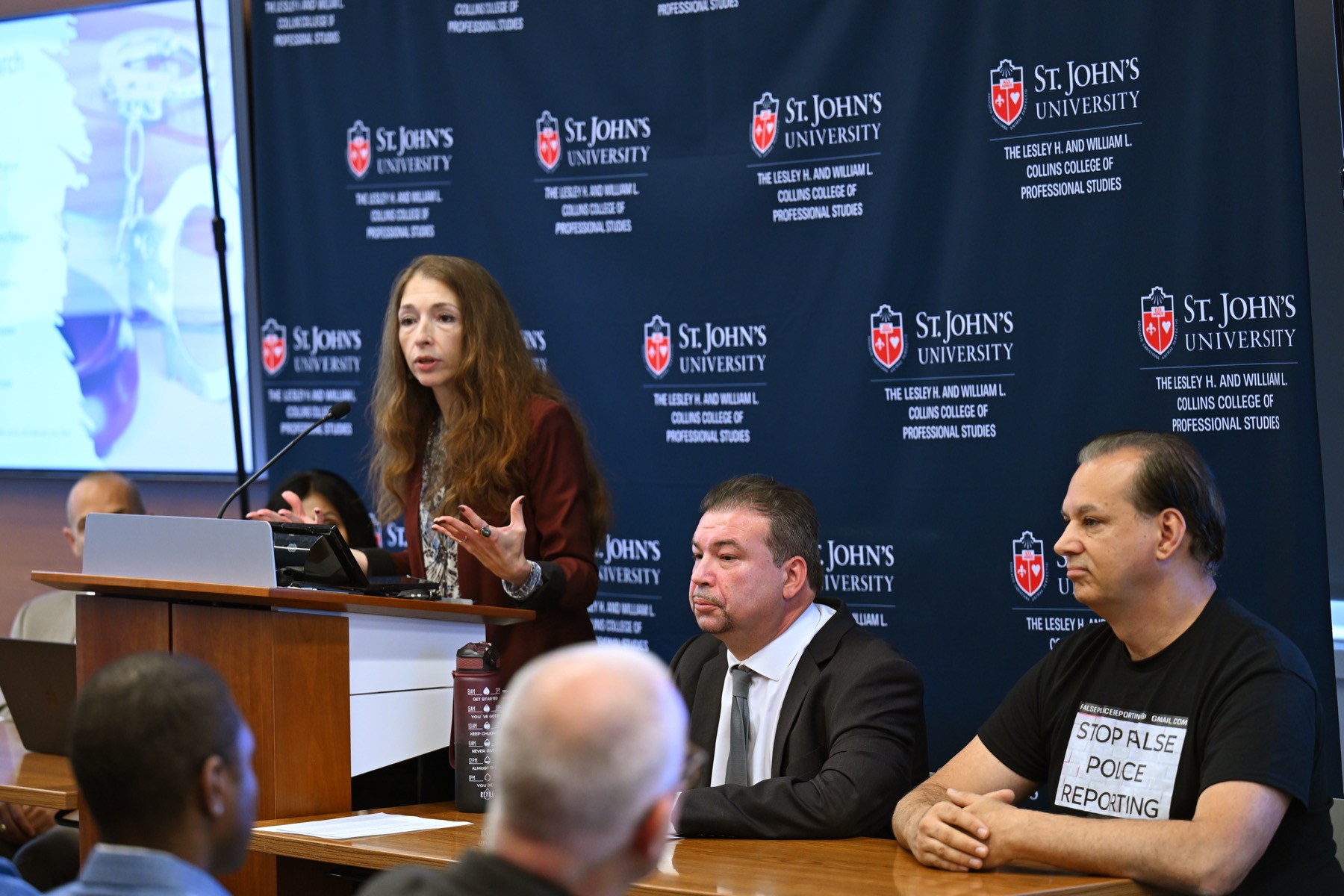
I deliver keynote addresses, invited lectures, conference presentations, and expert talks that make complex research accessible, relevant, and memorable.
Drawing on my background in forensic psychology, psychology and law, criminal justice, and investigative psychology, I connect scientific evidence with the real-world questions facing professionals, organizations, and communities. My presentations are designed to inform audiences while encouraging thoughtful discussion about what research means for policy and practice.
Each presentation can be customized to reflect the interests, experience, and professional responsibilities of the audience.
Featured Speaking Topics
Digital Shadows: Understanding Technology-Facilitated Sexual Violence
Technology has transformed how sexual and interpersonal abuse can be perpetrated, experienced, and sustained. This presentation explores the many forms of technology-facilitated sexual violence, including image-based sexual abuse, cyberstalking, impersonation, digital surveillance, online sexual harassment, and technology-enabled coercive control.
Drawing on current research and my forthcoming book, Digital Shadows: An Investigative Psychology Approach to Technology-Facilitated Sexual Violence, the presentation examines offender behavior, victim-offender relationships, the overlap between online and offline abuse, and the challenges these offenses present for investigators, practitioners, and policymakers.
This topic can be adapted for general, practitioner, investigative, legal, advocacy, or academic audiences.
Behind the Screen: The Psychology of Technology-Facilitated Offending
Who perpetrates technology-facilitated sexual and interpersonal abuse, what are they trying to achieve, and how does the relationship with the victim shape their behavior?
This presentation moves beyond technology and platforms to examine the psychological and interpersonal dynamics underlying digitally facilitated abuse. It considers how offenders may use technology to maintain access, exert control, punish, humiliate, exploit, or depersonalize victims, and why superficially similar behaviors may serve very different functions.
From Digital Evidence to Behavioral Insight
Digital evidence can reveal far more than isolated acts. When examined systematically, patterns of contact, surveillance, threats, impersonation, distribution, and escalation may offer insight into offender objectives, victim selection, relationship dynamics, and potential connections across cases.
This presentation introduces an investigative psychology approach to technology-facilitated offending and considers how behavioral analysis can support structured case assessment without relying on stereotypes or speculative profiling.
Behavioral Analysis of Violent Crime: Evidence, Application, and Myth
Popular portrayals of offender profiling often bear little resemblance to empirically grounded behavioral analysis. This presentation separates evidence from myth and introduces the foundations of investigative psychology.
Topics may include behavioral crime linkage, patterns across offenses, victim-offender dynamics, serial offending, and the appropriate use, and limitations, of behavioral inference in criminal investigations.
When Investigations Go Wrong: The Psychology of Wrongful Convictions
Wrongful convictions rarely result from a single mistake. They develop through interacting psychological, investigative, forensic, and systemic factors.
This presentation examines how memory errors, false confessions, confirmation bias, tunnel vision, unreliable testimony, forensic evidence, and organizational pressures can contribute to unjust outcomes. It also considers evidence-informed safeguards that can improve investigative decision-making and reduce the risk of error.
Beyond Exoneration: The Hidden Impact of Wrongful Convictions on Families
Exoneration is often portrayed as the end of a wrongful conviction story. For exonerees and their families, however, the effects can continue long after release.
This presentation explores the psychological, relational, social, and financial consequences experienced by families during wrongful incarceration and following exoneration. It highlights an often-overlooked group of secondary victims and considers what meaningful support and restoration should include.
Additional Topics
Presentations can also be developed or customized around:
- Cyberstalking and digital coercive control
- Image-based sexual abuse
- Victim-offender relationships in interpersonal crime
- Behavioral crime linkage and serial offending
- Offender decision-making and behavioral patterns
- Psychology and criminal investigations
- Eyewitness memory and false confessions
- Confirmation bias and investigative tunnel vision
- Survivor-centered responses to technology-facilitated abuse
- Emerging issues in forensic psychology and criminal justice
- Conducting applied research on sensitive and difficult-to-access populations
- Translating psychological research into criminal justice policy and practice
Speaking Formats
Presentations are available in person or virtually and can be adapted for:
- Keynote addresses
- Conference presentations
- Invited lectures
- Professional association events
- Practitioner and leadership briefings
- University and community events
- Expert panels and moderated discussions
- Webinars and virtual programs
- Podcast, media, and expert interviews
Audiences
My presentations are appropriate for a wide range of academic, professional, and public audiences, including:
- Law enforcement and investigative personnel
- Victim advocates and service providers
- Attorneys and legal professionals
- Mental health and forensic practitioners
- Policymakers and government agencies
- Professional associations
- Researchers, faculty, and students
- Nonprofit and community organizations
- Multidisciplinary task forces
- General audiences interested in psychology, crime, and justice
Plan an Engaging and Relevant Program
Every event is different. I work with organizers to tailor the content, depth, examples, and takeaways to their audience and goals.
To inquire about a keynote address, invited presentation, panel participation, webinar, podcast appearance, or other speaking engagement, please get in touch with information about your event, audience, preferred topic, and anticipated date.