
I provide consulting, professional training, and educational workshops that translate psychological and criminal justice research into practical insight. Each engagement is tailored to the organization, professional audience, and challenges being addressed.
My approach combines academic expertise with a strong focus on real-world application. Trainings move beyond simply describing a problem to consider what professionals can do with the available evidence, how it can inform recognition, assessment, investigation, prevention, policy, and victim-centered response.
Areas of Expertise
Technology-Facilitated Sexual Violence and Cyber Abuse
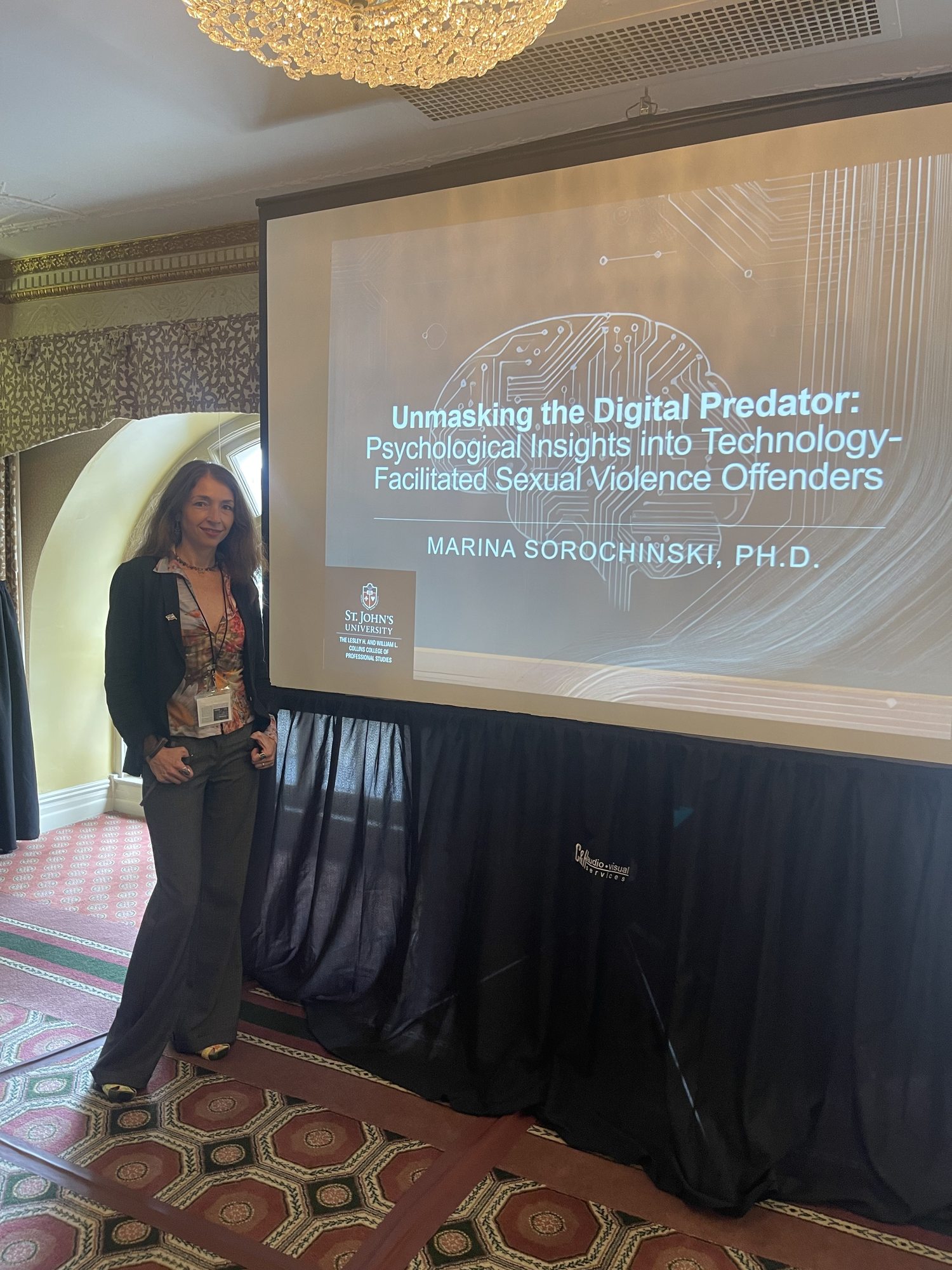
Technology is increasingly used to facilitate sexual violence, harassment, stalking, coercive control, and interpersonal abuse. These behaviors present distinctive challenges for investigators, victim-service professionals, attorneys, policymakers, educators, and technology platforms.
Consulting and training topics may include:
- Understanding the scope and forms of technology-facilitated sexual violence
- Image-based sexual abuse and nonconsensual intimate-image distribution
- Cyberstalking, digital surveillance, impersonation, and online harassment
- Technology as a tool of coercive control
- Offender behavior, objectives, and victim-offender relationships
- Recognizing escalation and connections between online and offline behavior
- Investigative challenges and behavioral approaches to case assessment
- Survivor-centered responses and the broader effects of digital victimization
- Prevention, professional education, and institutional policy development
- Improving multidisciplinary responses across law enforcement, legal, advocacy, and mental health settings
These sessions draw on my research and forthcoming book, Digital Shadows: An Investigative Psychology Approach to Technology-Facilitated Sexual Violence.
Behavioral Analysis of Violent and Interpersonal Crime
Behavioral evidence can help professionals develop more structured and evidence-informed ways of understanding criminal conduct. My work in investigative psychology examines patterns across offenses, relationships among crime-scene behaviors, and the inferences that can, and cannot, reasonably be drawn from them.
Consulting and training topics may include:
- Foundations of investigative psychology
- Behavioral analysis of violent, sexual, and interpersonal offenses
- Identifying meaningful patterns in offender behavior
- Behavioral crime linkage and serial offending
- Victim-offender relationship dynamics
- Offender decision-making and behavioral consistency
- Interpersonal roles expressed through offending behavior
- Integrating behavioral evidence into investigative decision-making
- Strengths, limitations, and common misconceptions surrounding offender profiling
- Avoiding overinterpretation and unsupported behavioral conclusions
Trainings emphasize empirically grounded analysis rather than intuition-based profiling.
Wrongful Convictions: Risk Factors, Consequences, and Prevention
Wrongful convictions are not produced by a single error. They typically emerge through the interaction of individual decisions, investigative practices, forensic evidence, institutional pressures, and broader systemic conditions.
Consulting and training topics may include:
- Psychological and systemic risk factors for wrongful convictions
- Eyewitness identification and memory
- False confessions and psychologically coercive interrogation practices
- Confirmation bias and tunnel vision in investigations
- Misuse or overstatement of forensic evidence
- Informant evidence and other sources of unreliable testimony
- The role of organizational culture and institutional decision-making
- Lessons from DNA and non-DNA exoneration cases
- Safeguards that support more reliable investigations and case review
My work also addresses what happens after a wrongful conviction, not only to the person who was convicted, but to families and communities.
Topics may include:
- Psychological, relational, financial, and social consequences for families
- Family experiences during incarceration and after exoneration
- Stigma, uncertainty, and prolonged institutional involvement
- Reentry and reintegration following exoneration
- Trauma-informed support for exonerees and their families
- The need for broader and more responsive post-exoneration services
Research, Program, and Policy Consultation
I also consult with organizations seeking assistance in developing, reviewing, or communicating research-informed programs and policies.
Services may include:
- Research design and methodology consultation
- Survey and assessment development
- Program evaluation planning
- Evidence reviews and research synthesis
- Review of training materials, protocols, or policy documents
- Translation of research findings for professional audiences
- Development of practitioner-oriented recommendations
- Consultation on interdisciplinary research initiatives
- Guidance on communicating complex or sensitive findings responsibly
Training Formats
Engagements can be adapted to different professional needs and delivered in person or virtually. Available formats include:
- Keynote and conference presentations
- One-hour introductory sessions
- Half-day or full-day professional training
- Interactive workshops
- Continuing education seminars
- Leadership and organizational briefings
- Multidisciplinary panel discussions
- Customized training series
- Individual research or program consultation
Who I Work With
Training and consultation may be appropriate for:
- Law enforcement agencies and investigative personnel
- Criminal justice and public-safety organizations
- Victim-service and advocacy organizations
- Attorneys, courts, and legal professionals
- Mental health and forensic practitioners
- Colleges, universities, and research centers
- Government agencies and policy organizations
- Professional associations and conference organizers
- Multidisciplinary task forces
- Community and nonprofit organizations
Customized to Your Needs
Every organization brings a different audience, level of experience, and set of priorities. Training content can be customized around particular cases, professional roles, organizational concerns, or learning objectives.
If you are interested in arranging a consultation, workshop, professional training, or customized program, please get in touch to discuss your organization’s needs.