Bridging Research, Investigations, and Policy in the Digital Age
Digital Harm Requires New Ways of Thinking.
Applying Investigative Psychology to Technology-Facilitated Sexual Violence
I help law enforcement agencies, government organizations, victim advocacy groups, legal professionals, and researchers better understand, investigate, and respond to technology-facilitated sexual violence, online coercive control, cyberstalking, image-based abuse, and related forms of digital offending.
Through research, consulting, professional training, and expert speaking, I bridge the gap between science and practice to improve investigations, policy, prevention, and victim response.

Research That Informs Practice
I am Dr. Marina Sorochinski, Associate Professor of Criminal Justice at St. John’s University, Research and Education Liaison of the Justice Initiative Center, and a forensic psychologist specializing in offender behavior, investigative psychology, and technology-facilitated sexual violence (TFSV).
My work examines how offenders think, behave, and interact with victims across digital environments, with the goal of developing evidence-based approaches that improve criminal investigations, risk assessment, prevention, and victim protection.
My research spans:
- Technology-facilitated sexual violence
- Online coercive control and cyberstalking
- Investigative Psychology
- Behavioral investigative advice
- Sexual offending
- Wrongful convictions
- Criminal decision making
- Police psychology
My work has been published in leading international journals and informs practitioners, policymakers, and multidisciplinary professionals working at the intersection of crime, technology, and victim protection.
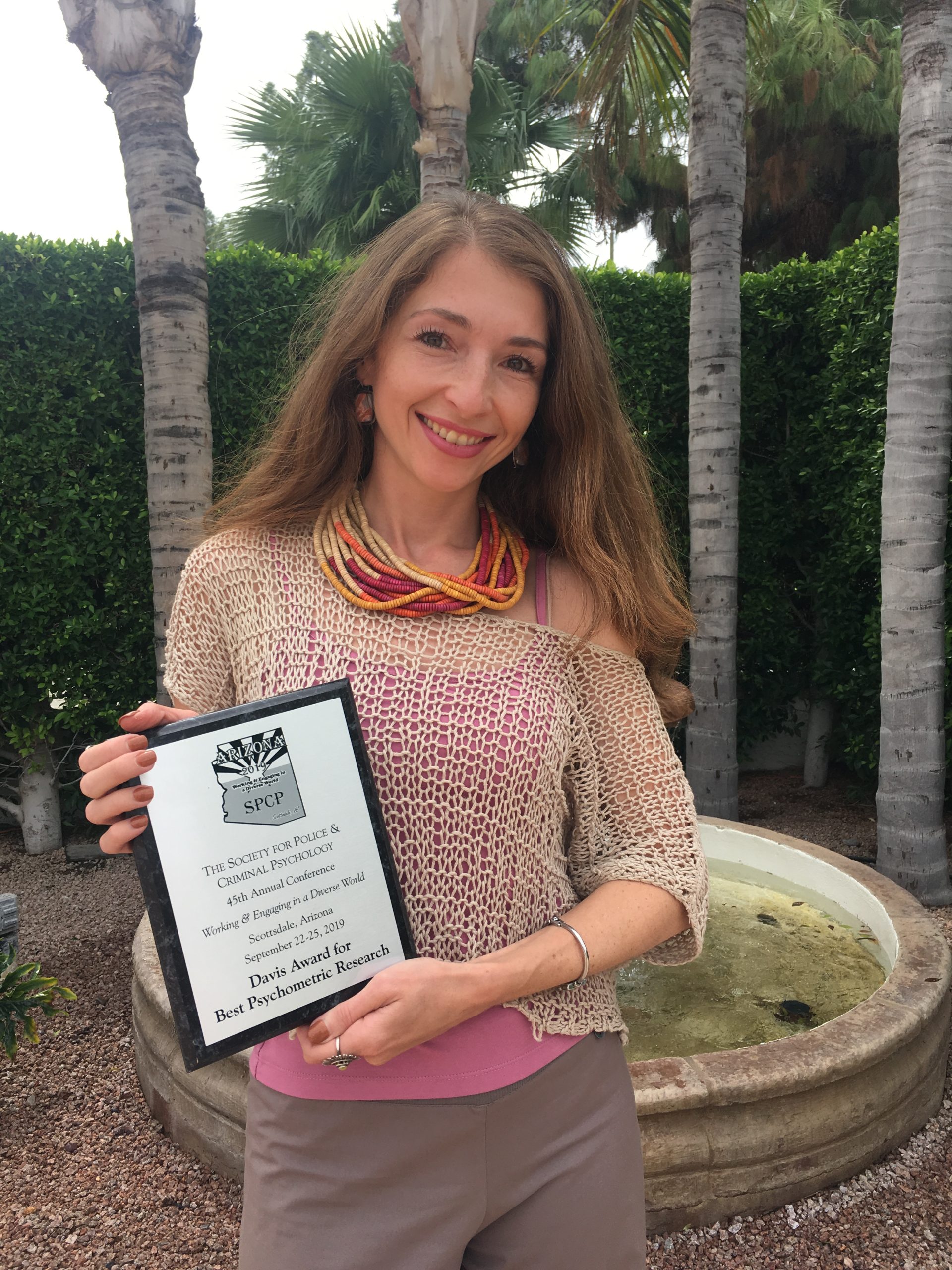
Davis Award for Best Psychometric Research, SPCP 45th Annual Conference, 2019
Advancing the Science of Digital Abuse
Technology has transformed the way interpersonal violence occurs. Yet investigative methods and theoretical models have not kept pace.
My research seeks to address that gap by developing behavioral frameworks that explain how digital offenders operate, why they offend, how online abuse escalates, and how investigations can better identify and respond to offending patterns.
Recent work includes:
- National U.S. research on the prevalence, risk factors, and consequences of technology-facilitated sexual violence
- Development of an Investigative Psychology framework for understanding digital sexual offending
- Research on behavioral patterns and offender typologies in online abuse
- Studies of coercive control, image-based abuse, cyberstalking, and digital victimization
- Research examining the impacts of wrongful convictions on families
- Work on behavioral crime linkage and investigative decision-making
Translating Research Into Practice
My work extends beyond academia to support professionals working in criminal justice, victim services, and public policy.
I regularly collaborate with:
- Law enforcement agencies
- Government organizations
- Victim advocacy organizations
- Prosecutors and legal professionals
- Universities
- Non-profit organizations
- International researchers
Current service includes participation in the New York State Cyber Abuse Task Force, where I contribute research expertise to multidisciplinary efforts addressing technology-facilitated abuse and improving responses to victims.
Evidence-Based Training for Today’s Digital Challenges
I provide consulting, workshops, keynote presentations, and customized professional training on topics including:
- Technology-facilitated sexual violence
- Online coercive control
- Cyberstalking
- Image-based sexual abuse
- Investigative Psychology
- Offender behavior and behavioral analysis
- Behavioral investigative advice
- Victim-offender dynamics
- Emerging trends in digital offending
- Research translation for policy and practice
Programs are tailored for law enforcement, prosecutors, victim advocates, universities, professional organizations, and multidisciplinary teams.
By the Numbers
Sources: 2026 curriculum vitae; funding total is the sum of the ten grants and fellowships listed in it, verified 2026-07-13
Common questions
What is technology-facilitated sexual violence?
What is an investigative psychologist?
Does Dr. Sorochinski speak outside of academia?
Does she consult on cases?
Do you help graduate students with dissertations?
How do I request an interview?
Let’s Work Together
Whether you’re looking for an expert speaker, specialized training, research collaboration, consulting, or media commentary, I’d be happy to discuss how I can support your organization.
Media requests receive a same-day reply. Or call (718) 990-3421.